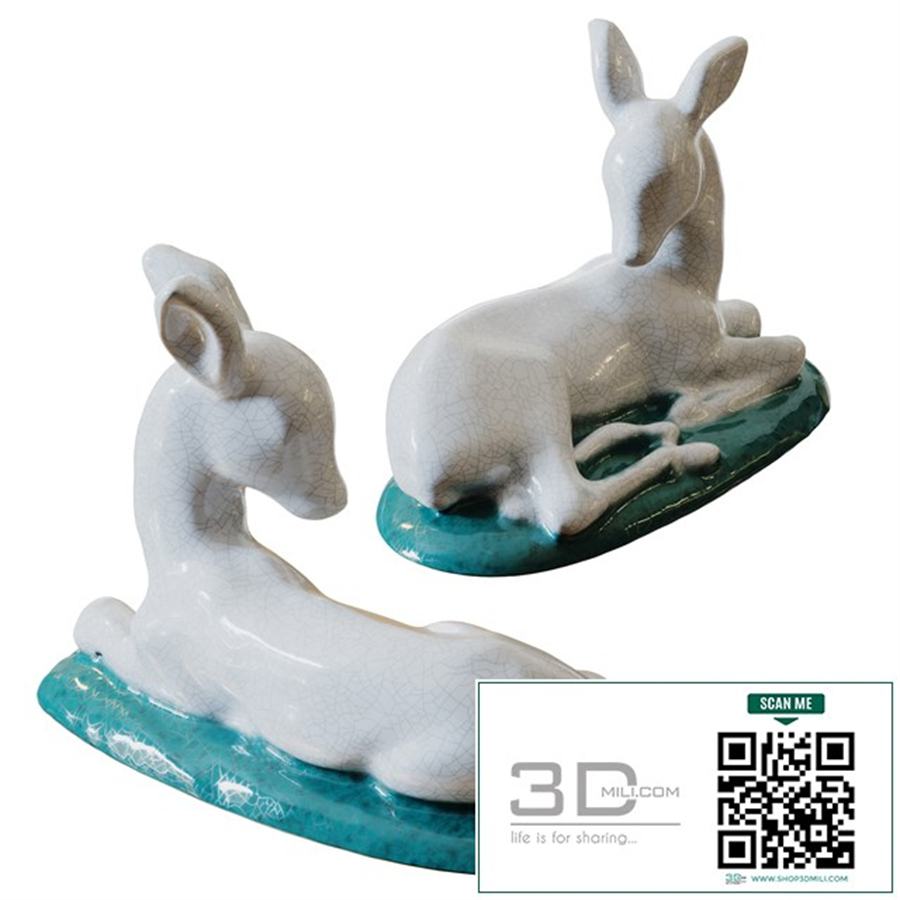
## The Sculpture of Roe Deer: A Multifaceted Exploration
This document delves into the multifaceted aspects of designing and creating a sculpture of a roe deer, exploring the artistic, technical, and conceptual considerations involved in bringing this graceful creature to life in three dimensions. From initial conceptualization to the final stages of finishing, we will examine the choices and challenges faced by the sculptor.
Part 1: Conceptualization and Artistic Vision
The first step in any sculptural endeavor is *conceptualization*. What *vision* does the artist have for this roe deer sculpture? Is it meant to capture the animal's *wildness* and *untamed spirit*, its *elegance* and *delicate beauty*, or perhaps a specific *moment* in its life – a fleeting leap, a peaceful graze, or a watchful stillness? The artist's *intent* will dictate the *style*, *materials*, and *techniques* employed throughout the process.
Several key questions need to be addressed during this phase:
* Scale: Will the sculpture be *life-sized*, a miniature representation, or something in between? The chosen *scale* significantly impacts the overall design and the technical challenges involved. A *monumental* sculpture demands different approaches than a smaller, more *intimate* piece.
* Pose: The *pose* selected significantly contributes to the overall *narrative* and *emotional impact*. A *dynamic pose*, such as a leaping deer, conveys energy and movement, while a *static pose* might emphasize tranquility and contemplation. Careful consideration must be given to the *balance* and *anatomical accuracy* of the chosen pose.
* Style: The *artistic style* adopted will influence every aspect of the sculpture's aesthetic. A *realistic* style prioritizes *anatomical accuracy* and detailed representation, while a *stylized* approach allows for greater artistic license and abstraction. Consideration might be given to styles such as *Art Deco*, *Modernism*, *Surrealism*, or even *folk art*, each lending a unique character to the final product.
* Material Selection: The *material* selected plays a crucial role in shaping the sculpture's *texture*, *weight*, *durability*, and overall *aesthetic*. Traditional materials like *bronze*, *marble*, and *wood* each offer unique challenges and possibilities. More contemporary materials like *resin*, *fiberglass*, or *stainless steel* provide alternative options with different properties. The choice will also depend on the *budget* and the *intended location* of the sculpture (indoor vs. outdoor).
* Context: Where will the sculpture be displayed? The *intended context* influences both the *scale* and the *style* of the sculpture. A piece intended for a museum setting might differ significantly from one intended for a private garden or public park. The *surroundings* should be considered to ensure the sculpture complements its environment, rather than clashing with it.
Part 2: The Technical Process: From Model to Finished Piece
Once the conceptual phase is complete, the sculptor embarks on the *technical process*. This involves a series of steps, which may vary depending on the chosen *materials* and *techniques*.
* Modeling: This stage often begins with a *small-scale maquette*, a preliminary model used to refine the design and explore various possibilities. Different modeling materials can be used, including *clay*, *wax*, or *foam*. This allows for experimentation and adjustments before committing to the final material. Detailed *anatomical studies* are crucial at this stage to ensure accuracy.
* Scaling and Armatures: If working with larger sculptures, a robust *armature* is vital to provide structural support. This internal framework, often made of *metal*, prevents warping and cracking. Accurate *scaling* ensures the final sculpture maintains the proportions established in the maquette.
* Casting (for certain materials): For materials like *bronze* or *resin*, a *mold* is created from the model. The molten material is then poured into the mold, creating a *cast* that faithfully reproduces the original form. This process involves intricate steps including *mold making*, *de-molding*, *cleaning*, and potentially *patination* (for bronze).
* Carving (for materials like stone or wood): Direct carving involves removing material from a larger block of *stone* or *wood* to reveal the desired form. This demands a high level of skill and precision, requiring a deep understanding of the *material's properties* and the *tools* needed to work with it.
* Finishing: The final stage involves refining the surface of the sculpture. This might include *sanding*, *polishing*, *painting*, or applying a *protective coating*. The level of detail in the finishing stage significantly affects the final aesthetic of the piece. For *bronze*, this may include *patination* to achieve specific colours and effects.
Part 3: Materials and Techniques: A Closer Look
The choice of *material* has a profound impact on the final aesthetic and durability of the roe deer sculpture.
* Bronze: A classic choice for sculpture, *bronze* offers durability and allows for intricate detail. The *lost-wax casting process* is commonly used. *Bronze* sculptures can be patinated to achieve a wide range of colors and finishes, from a deep, rich brown to a verdigris green.
* Marble: A timeless material, *marble* allows for a smooth, polished finish and a sense of elegance and grandeur. *Carving marble* requires immense skill and patience, due to its hardness and potential for fracturing.
* Wood: Different types of *wood* offer unique textural and color qualities. The choice of wood influences the carving techniques employed. *Wood sculptures* can be finished with stains, oils, or lacquers to enhance their appearance and durability.
* Resin: A more contemporary material, *resin* allows for complex shapes and relatively quick production. It can be cast in molds, offering flexibility in terms of size and detail. *Resin* can be pigmented to achieve a wide range of colours.
* Stone (other than marble): Materials like *limestone*, *sandstone*, or *granite* offer unique properties and aesthetic qualities. Each stone type requires different carving techniques and tools.
Part 4: Capturing the Essence of the Roe Deer
Creating a compelling sculpture of a roe deer requires a deep understanding of the animal's *anatomy*, *behavior*, and *presence*. This goes beyond simply replicating its physical form; it involves capturing its *spirit* and *essence*.
* Anatomical Accuracy: Accurate depiction of the roe deer's *musculature*, *skeleton*, and *proportions* is crucial, especially in realistic styles. Sketches, photographs, and even anatomical references can help achieve this.
* Movement and Pose: The chosen *pose* dramatically influences the sculpture's overall impression. A *dynamic pose* captures the animal's agility and speed, while a more *static pose* might emphasize its grace and tranquility.
* Texture and Detail: Capturing the *texture* of the roe deer's coat, from the smoothness of its underbelly to the subtle variations in its fur, adds realism and depth to the sculpture. Careful attention to detail in the *eyes*, *ears*, and *hooves* brings the animal to life.
* Expression: Even in a non-anthropomorphic depiction, the sculptor can convey a sense of the roe deer's *emotional state* through subtle variations in its *pose* and the *subtlety* of its facial features.
Part 5: Conclusion: Beyond the Physical Form
The creation of a roe deer sculpture extends beyond the technical aspects of material and process. It's an artistic endeavor that strives to capture the *beauty*, *grace*, and *wildness* of this captivating creature. The final piece, whether realistic or abstract, serves as a testament to the artist's skill, vision, and understanding of their subject. The successful sculpture transcends its physical form, becoming an embodiment of the artist's interpretation of the roe deer, inviting viewers to engage with its beauty and contemplate the natural world it represents. The process, from initial *concept* to *final finish*, is a journey of artistic exploration and technical mastery, resulting in a work of art that holds both aesthetic and emotional value.