## Sculpture: Abstract - An Exploration of Form and Meaning
This exploration delves into the fascinating world of _abstract sculpture_, a genre that transcends representational limitations to engage directly with the essence of _form_, _space_, and _material_. Moving beyond the recognizable depiction of objects or figures, abstract sculpture invites the viewer into a dialogue with the artwork itself, prompting introspection and personal interpretation. This journey will examine the historical evolution of this compelling art form, its defining characteristics, prominent artists, and the enduring impact it holds in the contemporary art landscape.
Part 1: Defining Abstract Sculpture
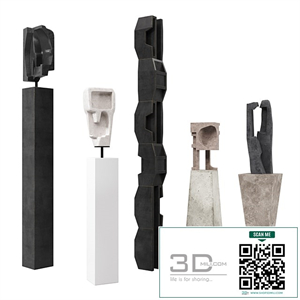
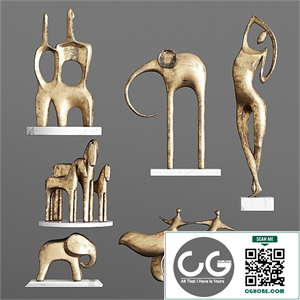
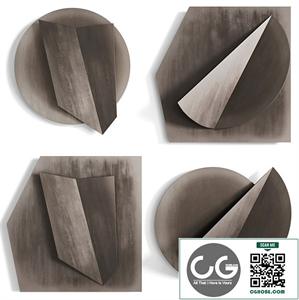
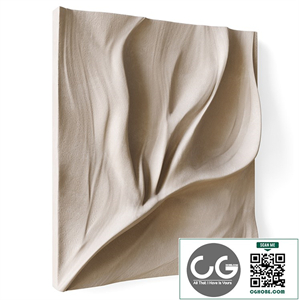
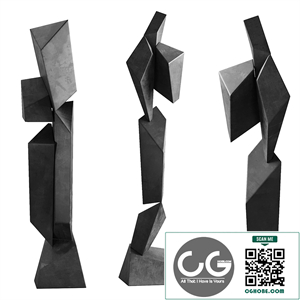
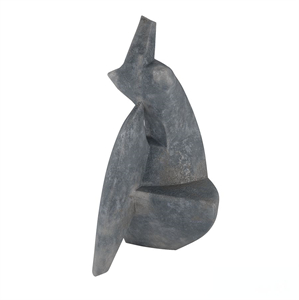
What precisely constitutes _abstract sculpture_? Unlike _figurative sculpture_, which seeks to realistically represent the human form, animals, or objects from the natural world, abstract sculpture prioritizes _non-representational_ elements. It utilizes shape, texture, volume, and spatial relationships to create a visual experience that is independent of literal meaning. The emphasis is on the intrinsic qualities of the material and the artistic manipulation of form, engaging the viewer's perception in a more visceral and intellectual way.
This does not mean that abstract sculpture is devoid of meaning. Instead, the meaning is embedded within the formal elements themselves, inviting a more personal and subjective response from the observer. The artist's intentions might be implicit, allowing space for multiple interpretations, or they might be overtly expressed through the choice of materials, techniques, and the overall aesthetic. Consider, for example, the stark simplicity of a minimalist sculpture versus the dynamic complexity of a kinetic work. Both, however, are firmly rooted within the realm of abstraction, albeit expressing different facets of its possibilities. The inherent ambiguity of abstract sculpture is a key element of its power, its ability to elicit a range of emotions and thoughts, pushing beyond a simple, singular narrative.
Part 2: A Historical Overview
The development of _abstract sculpture_ wasn't a sudden break from tradition, but rather a gradual evolution spanning several artistic movements. While some early examples of non-representational sculpture can be found in various ancient cultures, the deliberate pursuit of abstraction as a primary aesthetic goal emerged much later.
* _Early 20th Century Influences:_ The seeds of _abstract sculpture_ were sown in the early 20th century, with movements like _Cubism_ and _Futurism_ significantly influencing the shift away from representational art. Artists began to fragment and reassemble forms, challenging traditional notions of perspective and representation. The influence of these movements is palpable in the works of pioneering sculptors who experimented with new forms and materials.
* _Constructivism and Suprematism:_ _Constructivism_, with its emphasis on geometric forms and industrial materials, and _Suprematism_, focusing on pure geometric abstraction, played a pivotal role in shaping the vocabulary of _abstract sculpture_. Artists like Naum Gabo and Vladimir Tatlin championed these movements, developing sculptures that prioritized the interplay of lines, planes, and volumes. Their works explored the potential of new materials, embracing industrial components as integral elements of the artistic process.
* _Modernism and Beyond:_ The modernist era witnessed a flourishing of _abstract sculpture_, with artists exploring a wide spectrum of styles and approaches. _Minimalism_, with its focus on simplicity and reduction to essential forms, emerged as a dominant force, exemplified by the works of Donald Judd and Sol LeWitt. Their sculptures often featured simple geometric forms, industrial materials, and a rejection of emotional expression. Conversely, _Abstract Expressionism_, emphasizing spontaneity, gestural expression, and emotion, produced monumental sculptures embodying energy and raw emotion. Artists like David Smith explored the potential of welding and industrial materials to create large-scale abstract works.
The legacy of these movements continues to inform contemporary abstract sculpture, creating a rich tapestry of styles and approaches.
Part 3: Key Materials and Techniques
The choice of _material_ is intrinsically linked to the aesthetic and conceptual intentions of the artist. The physical properties of the chosen material – its texture, weight, color, and malleability – significantly contribute to the overall impact of the sculpture. The techniques employed further refine the interplay of form and material.
* _Traditional Materials:_ While modern and contemporary artists often embrace new materials, traditional materials like _stone_, _wood_, _bronze_, and _marble_ continue to be utilized, often with innovative techniques. Carving, casting, and modeling remain crucial techniques for shaping these materials into abstract forms. The enduring quality and inherent beauty of these materials contribute to the timeless appeal of many abstract sculptures.
* _Modern and Contemporary Materials:_ The 20th and 21st centuries have witnessed an explosion of new materials used in sculpture, including _steel_, _aluminum_, _plastics_, _plexiglass_, and various _found objects_. These materials offer a diverse range of possibilities for manipulating form and texture, often reflecting the industrial and technological advancements of the time.
* _Techniques:_ Beyond the choice of materials, the techniques employed are crucial in shaping the final form. _Casting_ allows for the precise replication of forms, while _welding_ enables the creation of complex structures from disparate elements. _Assemblage_, the gathering and combining of disparate objects, often found objects, has become a significant technique for creating abstract works that address themes of consumption, recycling, and the nature of objects. _Kinetic sculpture_, incorporating moving parts, introduces the element of time and change into the sculptural experience.
Part 4: Prominent Artists and Their Contributions
Several artists have significantly shaped the landscape of _abstract sculpture_. Their unique approaches to form, material, and concept have profoundly impacted subsequent generations of artists.
* _Constantin Brancusi:_ Brancusi's highly influential works, with their emphasis on _simplicity_, _pure form_, and the exploration of essential shapes, paved the way for minimalist and abstract sculpture. His smooth, polished surfaces and carefully considered proportions elevated the material itself to a primary focus.
* _Henry Moore:_ Moore's biomorphic forms, often inspired by the human form but abstracted to essential shapes, continue to inspire awe and contemplation. His mastery of stone and bronze, his ability to convey a sense of both weight and fluidity, solidified his place as a giant of 20th-century sculpture.
* _Barbara Hepworth:_ Hepworth's sculptures, characterized by their piercing holes and elegant forms, are a testament to her exploration of space and form. Her use of light and shadow, her ability to create a sense of movement within stillness, have earned her a prominent position in the history of abstract sculpture.
* _Alexander Calder:_ Calder’s innovative _kinetic sculptures_, known as mobiles, introduced the element of movement and chance into the sculptural experience. Their graceful, balanced forms, often comprised of brightly colored abstract shapes, evoke a sense of playfulness and wonder.
* _Donald Judd:_ Judd's minimalist sculptures, characterized by their industrial materials and rigorous geometry, are a testament to the power of simplicity. His work stripped away superfluous elements, focusing on the inherent qualities of form and material.
These are just a few examples of the many artists who have contributed to the rich history of abstract sculpture. Each artist’s unique approach has broadened the boundaries of the genre, creating a vast and varied landscape of artistic expression.
Part 5: Interpreting and Engaging with Abstract Sculpture
Engaging with _abstract sculpture_ is an active process. Unlike representational art, which often provides a readily accessible narrative, abstract sculpture encourages a more personal and subjective response. There is no single “correct” interpretation; rather, the meaning is derived from the individual viewer’s experience and interaction with the work.
To fully appreciate an abstract sculpture, it's helpful to consider several aspects:
* _Form and Shape:_ Analyze the interplay of lines, planes, volumes, and negative space. Consider how these elements create a sense of balance, tension, or movement.
* _Material and Texture:_ Examine the material's physical properties and how they contribute to the overall aesthetic. The texture of the surface, the weight of the form, the color, and the reflectivity all play a crucial role.
* _Scale and Proportion:_ Consider the size of the sculpture in relation to the surrounding space. The scale can dramatically impact the viewer's experience, influencing feelings of intimacy or awe.
* _Space and Light:_ Observe how the sculpture interacts with the space around it and the light falling upon it. Light and shadow can significantly alter the perception of form and texture.
By actively engaging with these aspects, the viewer can develop a deeper understanding and appreciation for the complexities and nuances of abstract sculpture. The experience becomes one of personal discovery, prompting reflection and a more profound connection with the artwork.
In conclusion, _abstract sculpture_ remains a dynamic and evolving art form, pushing the boundaries of artistic expression and challenging our perceptions of form, space, and meaning. From its historical roots in early 20th-century movements to its vibrant contemporary manifestations, abstract sculpture continues to inspire awe, provoke thought, and engage viewers in a deeply personal dialogue with the artwork itself.